
Classes
Enlightenment
Division I: Floral Design
Guidelines

Please carefully read and follow the GCA Rules, General Information, MFAH Rules, and Timetable for Exhibitors.

  1. Advanced online registration is open Monday, September 28, 2026, 10:00 a.m. CST through Monday, January 25, 2027, 6:00 p.m. CST online at flohouston.org. For questions regarding registration, please contact the Website Liaison/Registration Chair.
  2. An exhibitor is permitted only one entry per class but may enter more than one class.
  3. The exhibitor(s) under whose name(s) the entry has been registered must create and complete the design. All participants must be listed on the entry card. Only listed exhibitors and show personnel may be on the show floor at the time of entry.
  4. No more than two exhibitors may execute a design unless otherwise stated in the schedule.
  5. If forced to withdraw, an exhibitor must notify the Division Chair and Class Consultant and find a substitute unless there is a waiting list for the class.
  6. All designs must be executed at the show; complex components requiring extensive time for construction may be prefabricated and assembled during the allowed installation time at the show.
  7. There are a limited number of carts; therefore, it is advised to bring your own, labeled cart if you need to transport your items. Please read all Museum of Fine Arts, Houston, Rules.
  8. All entries must include fresh and/or dried plant material. Fresh plant material must be in water or conditioned in such a way as to remain in pristine form. Rooted plant material is allowed provided no soil is attached with the exception of pot-et-fleur classes. An entry is expected to be maintained in show condition.
  9. Mechanics should not be visible unless they are an integral part of the design.
  10. Anything not prohibited in the GCA Rules, Floral Design Division Guidelines, the MFAH Rules, or individual class descriptions is permitted.
  11. Cut fruits and vegetables are not permitted. Food of any kind is not permitted. Neither fur nor hair, shells, or bones are permitted; see GCA Rules #5.
  12. Accessories are permitted unless otherwise stated in the class description.
  13. Pedestals may not be moved. Tops of pedestals may not be enlarged or draped. Floral designs have no height restrictions, unless specified. Pedestal dimensions are outlined in each class. All pedestals are white.
  14. The MFAH does not have dumpsters on site, so any exhibitors who have large-scale trash, such as boxes, should plan to dispose of it offsite. Please clean up your work area; the MFAH is not able to clean up work areas.
  15. Judging will be based on the principles of design: balance, contrast, dominance, proportion, rhythm, and scale; and the elements of design: light, space, line, form, color, texture, pattern, and size. Creativity, distinction, and conformance to and interpretation of the class and schedule are also considered.
  16. Color reproductions of works of art, where applicable, will be online at flohouston.org or mfah.org. It is possible the colors will not match the actual colors of the piece of art perfectly and the Judges will be made aware of this.
  17. Museum collections are subject to change. If this occurs, the Floral Design Committee will notify exhibitors as soon as possible.
  18. The amount of water in floral supply buckets must not exceed three inches in depth and two inches in squeeze bottles. Any additional water needed must be coordinated by MFAH personnel. Please read all Museum of Fine Arts, Houston, Rules.
  19. A plant list with the botanical and common names along with a mandatory statement of intent, of no more than 25 words, should be entered using the entry form online at flohouston.org by Monday, March 29, 2027. Changes to the plant list may be made at the show. Notify the Pre-Judged Entry Card Chairs of any changes to your entry card before judging.
  20. All entries must be removed on Wednesday, April 28, 2027, between 5:15 p.m. and 7:00 p.m. For an additional fee, an out-of-town exhibitor’s entry may be returned by a shipping service. Please see Container Return Form at flohouston.org for additional information or contact Container Return Chairs.
  21. Questions regarding class requirements may be directed to Class Consultant and/or Division Chairs.

The scale of points by which all classes are to be judged

(as per FS & JG Book 4: Judging at Flower Shows, 2026 Edition):

  • Conformance 10
  • Interpretation 20
  • Creativity 10
  • Design (Principles and Elements) 50
  • Distinction 10
  • Total 100
Class 1. Sarcophagus – A Reflection on a Life Well Lived

Create a design inspired by the Sarcophagus Panel with the Indian Triumph of Dionysus, a magnificent place of final rest; staged on a 15 1/2-inch-square top x 40-inch-tall pedestal. May not exceed 15 inches from the center of the pedestal. Viewed and judged from three sides.

Class Consultant: Stephanie Fox / 713-875-4664 / xofsteph@gmail.com

Division: Division I: Floral Design
Location: Beck Cullen Atrium
Fee: Free
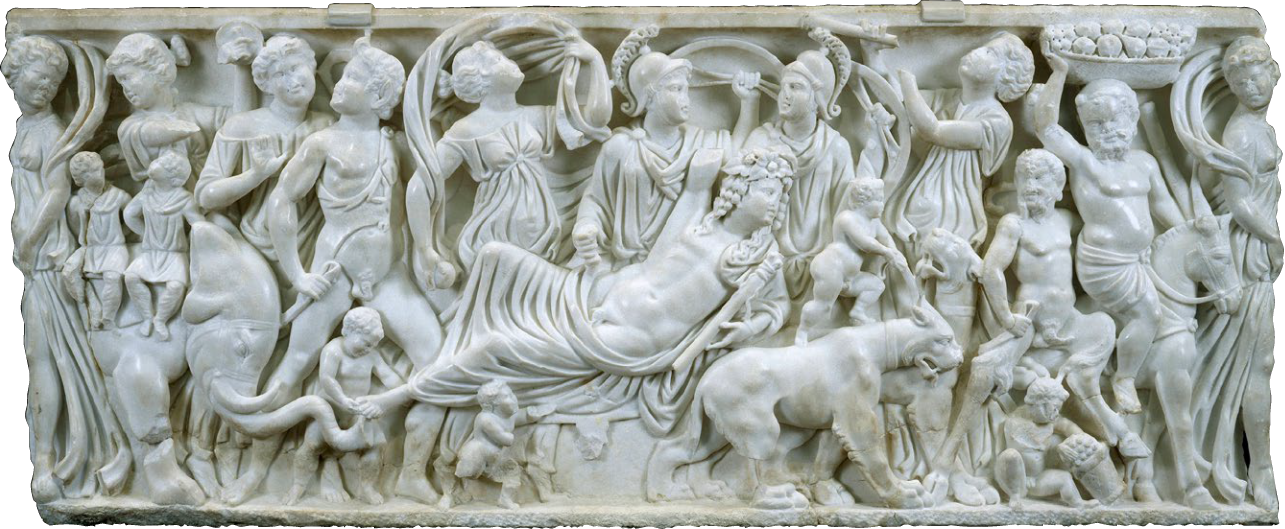
Sarcophagus Panel with the Indian Triumph of Dionysus

Roman, AD 180–195
Marble
34 1/2 × 85 3/4 × 9 1/2 in.
Museum purchase funded by Lee and Joe Jamail in honor of Caroline Wiess Law, 2003.53.1

0 / 6 Max Entries
Registration will be open on 09/28/2026 10:00 am CST
Class 2. Helmets – Then and Now

Create a helmet from a real or imagined time of war that might have been worn by the warrior women of the Amazon or their Roman counterparts; displayed on hat stand provided by the committee and staged on a 15 1/2-inch-square x 40-inch-tall pedestal; must include at least one reflective or metallic element. Viewed and judged from three sides.

Class Consultant: Tara Caldwell / 832-721-3741 / tthmcaldwell@sbcglobal.net

Division: Division I: Floral Design
Location: Beck Cullen Atrium
Fee: Free

0 / 4 Max Entries
Registration will be open on 09/28/2026 10:00 am CST
Class 3. A Look to the Past

Create an exhibition table design interpreting the American Sideboard, c. 1855. Table size is 30 inches round x 30 inches tall. Table will be placed on a 36-inch-square x 5-inch-tall white platform, which may not be altered or embellished. Tablecloth not provided. Food and silverware are not allowed. Design may not extend beyond the platform’s horizontal dimensions and must not exceed 10 feet in overall height from the floor. Viewed and judged from all sides.

Exhibition table: a display using the components of dining in an artistic presentation as a coordinated design. The practical service of food should not be implied. (FS & JG Book 5: Glossary of Terms)

Class Consultant: Kelty Crain / 713-562-8808 / keltycrain@gmail.com

Division: Division I: Floral Design
Location: Beck Gallery 108
Fee: Free
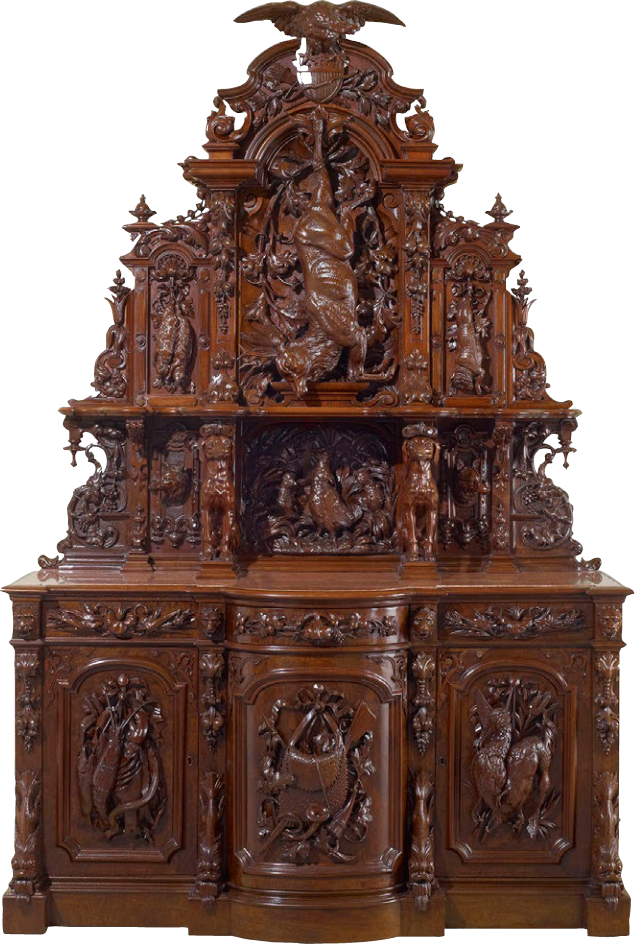
Sideboard

American, c. 1855
American tulipwood, northeast white pine, black walnut, and marble
106 × 69 × 28 in.
Museum purchase funded by Anaruth and Aron S. Gordon, 83.46

0 / 4 Max Entries
Registration will be open on 09/28/2026 10:00 am CST
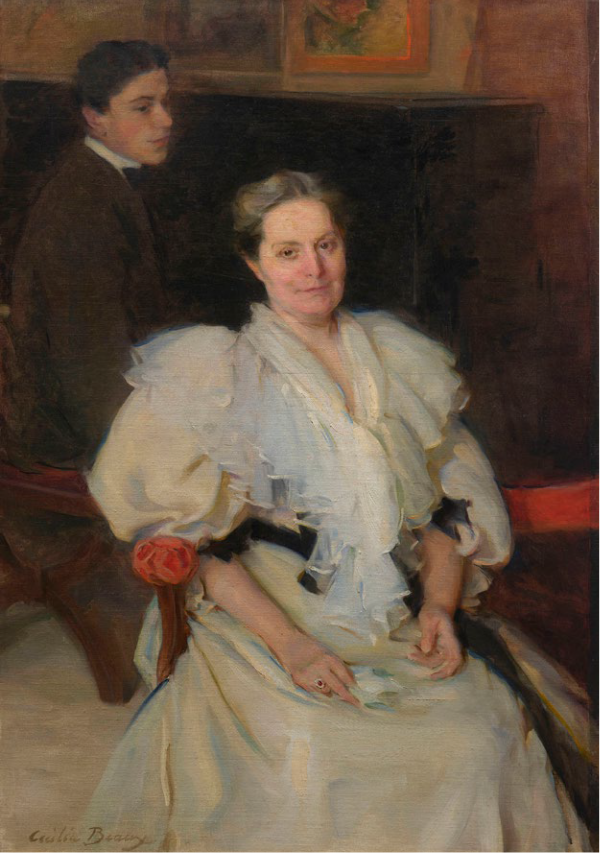
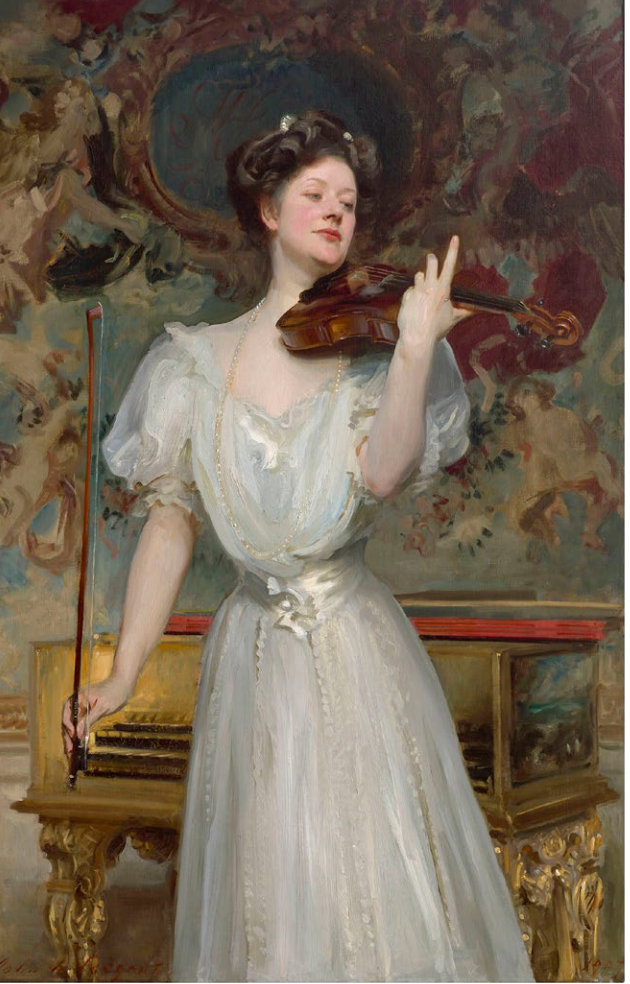
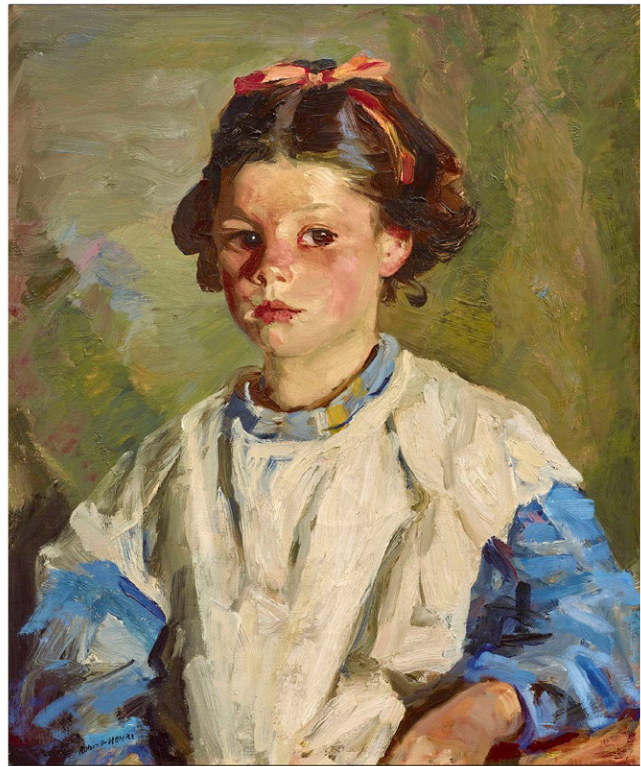
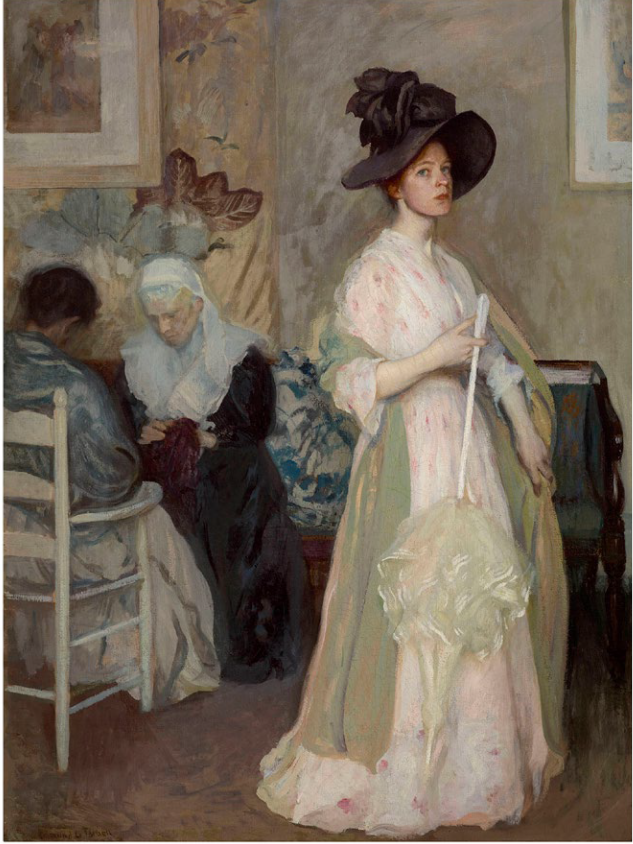
Class 4. Luminous Ladies

Create a monochromatic design inspired by one of the following pieces of art; staged on a 15 1/2-inch-square x 40-inch-tall pedestal. Design may not exceed 15 inches from the center of the pedestal. Gallery wall color is Benjamin Moore Marine Blue. Viewed and judged from three sides.

Monochromatic design: a design incorporating plant material of just one color, including shades and tints of the hue. A small amount of green foliage is allowed with the chosen single color. A small bit of attached conforming floral parts is permitted, e.g., the yellow center of a purple aster. Unless stated in the schedule, the container, bases and/or stands do not need to be the same color. (FS & JG Book 5: Glossary of Terms)

Class Consultant: Renee Davis / 832-215-5766 / rdominguedavis@hotmail.com

Division: Division I: Floral Design
Location: Beck Gallery 109
Fee: Free
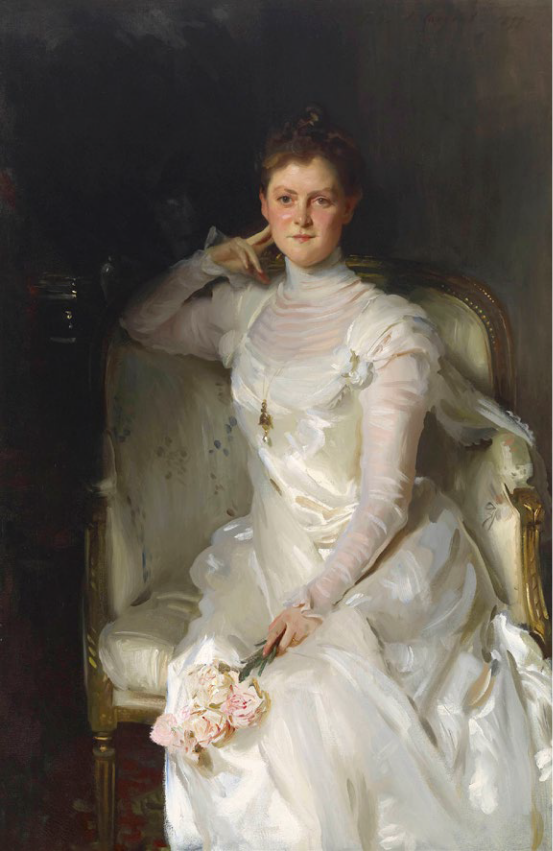

John Singer Sargent

Mrs. Joshua Montgomery Sears (Sarah Choate Sears), 1899
Oil on canvas
58 1/8 × 38 1/8 in.
Museum purchase funded by George R. Brown in honor of his wife, Alice Pratt Brown, 80.144
Registration will be open on 09/28/2026 10:00 am CST

Cecilia Beaux

Mother and Son, 1896
Oil on canvas
57 1/4 × 40 in.
Museum purchase funded by Ann G. Trammell in memory of W. Bryan Trammell, Jr., 2024.996
Registration will be open on 09/28/2026 10:00 am CST

John Singer Sargent

Lady Speyer, 1907
Oil on canvas
58 × 38 in.
Sarofim Foundation Collection

Registration will be open on 09/28/2026 10:00 am CST

William Chase

Lady in the Evening, c. 1893
Oil on canvas
29 × 24 in.
Sarofim Foundation Collection
Registration will be open on 09/28/2026 10:00 am CST

Robert Henri

The Pink Ribbon (Mary Ann Caferty), c. 1927
Oil on canvas
24 × 20 in.
Sarofim Foundation Collection
Registration will be open on 09/28/2026 10:00 am CST

Edmund Charles Tarbell

Woman in Pink and Green, 1897
Oil on canvas
47 × 35 1/2 in.
Sarofim Foundation Collection

Registration will be open on 09/28/2026 10:00 am CST
Class 5. Glowing Gown

Create a design interpreting the gown on display using fresh plant material and some reflective elements; staged on a 14-inch-square x 36-inch-tall pedestal; viewed and judged from four sides. Photo of gown will be sent to exhibitor after registration.

Class Consultant: Sara Ledbetter / 713-854-5555 / sara@ledbetterhome.net

Division: Division I: Floral Design
Location: Beck Gallery 200
Fee: Free

0 / 4 Max Entries
Registration will be open on 09/28/2026 10:00 am CST
Class 6. Circling Back

Challenge class for out-of-town Garden Club of America members at any level in the judging. Staged on a 15 1/2-inch-square by 40-inch-tall pedestal. Entry fee: $95.00. For payment information, go to flohouston.org. Create a design using the components, mechanics, containers, plant material, and accessories supplied by the Flower Show Committee. Viewed and judged from four sides.

Class Consultant: Madeleine Elmer / 713-248-1638 / madeleine@fleurdeviehouston.com

Division: Division I: Floral Design
Location: Beck Gallery 203
Fee: $95

0 / 4 Max Entries
Registration will be open on 09/28/2026 10:00 am CST
Class 7. Cognitive Reflection

Create a two-sided design; staged on a 15 1/2-inch-square x 40-inch-tall pedestal. May not exceed 15 inches from the center of the pedestal. Viewed and judged from four sides.

Two-sided design: a design organized in one or more containers that are joined to appear as one; opposing sides (back and front, never left and right) present a composition thematically linked. A concentration of components between the two contrasting design segments prevents one side from showing through to the other in their focal areas. Staged to be viewed from all sides and judged as one unit from the front and the back. (FS & JG Book 5: Glossary of Terms)

Class Consultant: Elizabeth Stone / 713-539-4785 / elizabeth@silverstone-events.com

Division: Division I: Floral Design
Location: Beck Gallery 207
Fee: Free

0 / 6 Max Entries
Registration will be open on 09/28/2026 10:00 am CST
Class 8. Layered Legacy

Create an Italian layered design interpreting the painting by Paolo de Matteis, Allegory of Knowledge and the Visual Arts Crowning Parthenope, the Siren of Naples. Staged on a 15 1/2-inch-square x 40-inch-tall pedestal. May not exceed 15 inches from the center of the pedestal. Viewed and judged from three sides.

Italian layered design: a contemporary version of a horizontal design in which plant material is stacked horizontally with additional placements of vertical and/or diagonal components. No focal point. (FS & JG Book 5: Glossary of Terms)

Class Consultant: Wendy Askew / 713-540-1028 / wwa@texaskew.com

Division: Division I: Floral Design
Location: Beck Gallery 214
Fee: Free
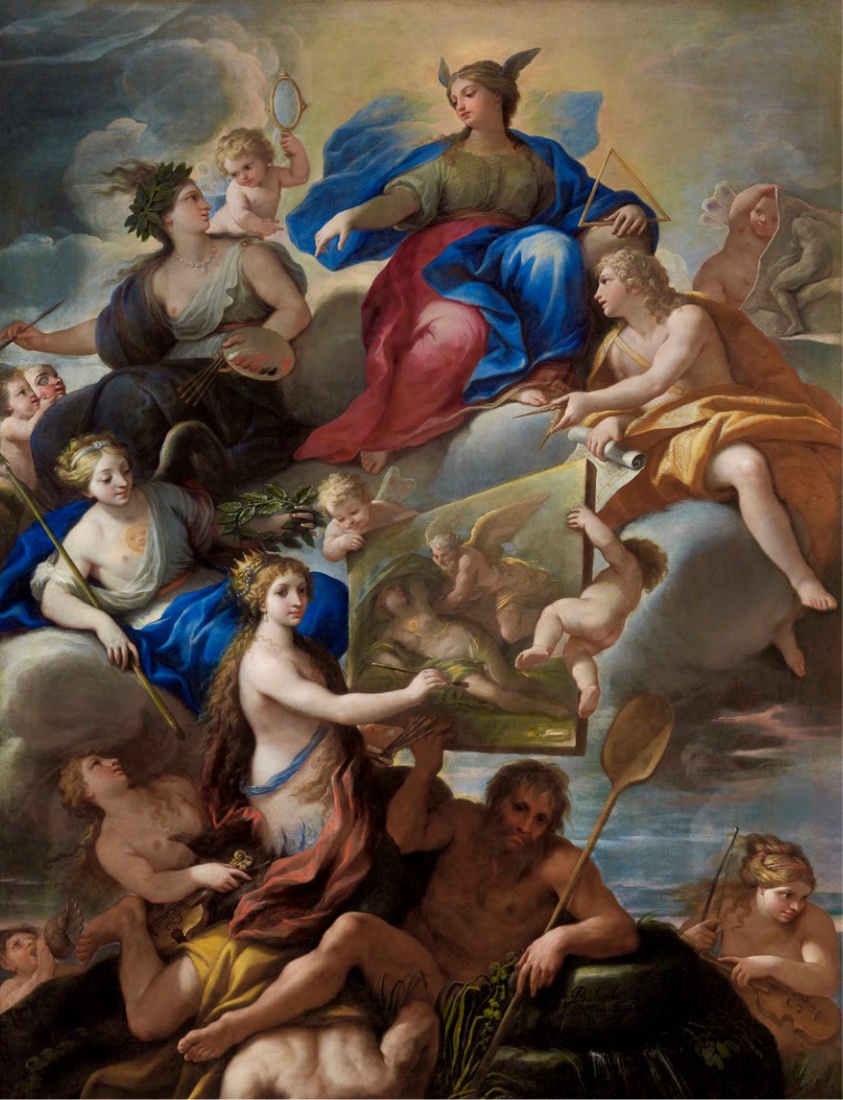
Paolo de Matteis

Allegory of Knowledge and the Visual Arts Crowning Parthenope, the Siren of Naples, c. 1685
Oil on canvas
144 1/2 × 99 5/8 in.
Sarah Campbell Blaffer Foundation, Houston

0 / 6 Max Entries
Registration will be open on 09/28/2026 10:00 am CST
Class 9. Patterns in Life

Create a stretch design interpreting the two portraits of Viscount and Viscountess Falkland. Staged on two pedestals 15 1/2-inch-square x 40 inches tall. Design may not exceed 15 inches from the center of the pedestal. Viewed from four sides; judged from three sides.

Stretch design: a design composed of two units of unequal size joined by a prominent stretch component. Length and strength of stretch component (which may extend in any direction) must be appropriate to other components and to its prominent role. Smaller unit must appear to have been forcibly pulled away from the larger unit. Dynamic tension is important. (FS & JG Book 5: Glossary of Terms)

Class Consultant: Carole Bailey / 713-392-1681 / cbaileybmt@aol.net

Division: Division I: Floral Design
Location: Beck Gallery 215
Fee: Free
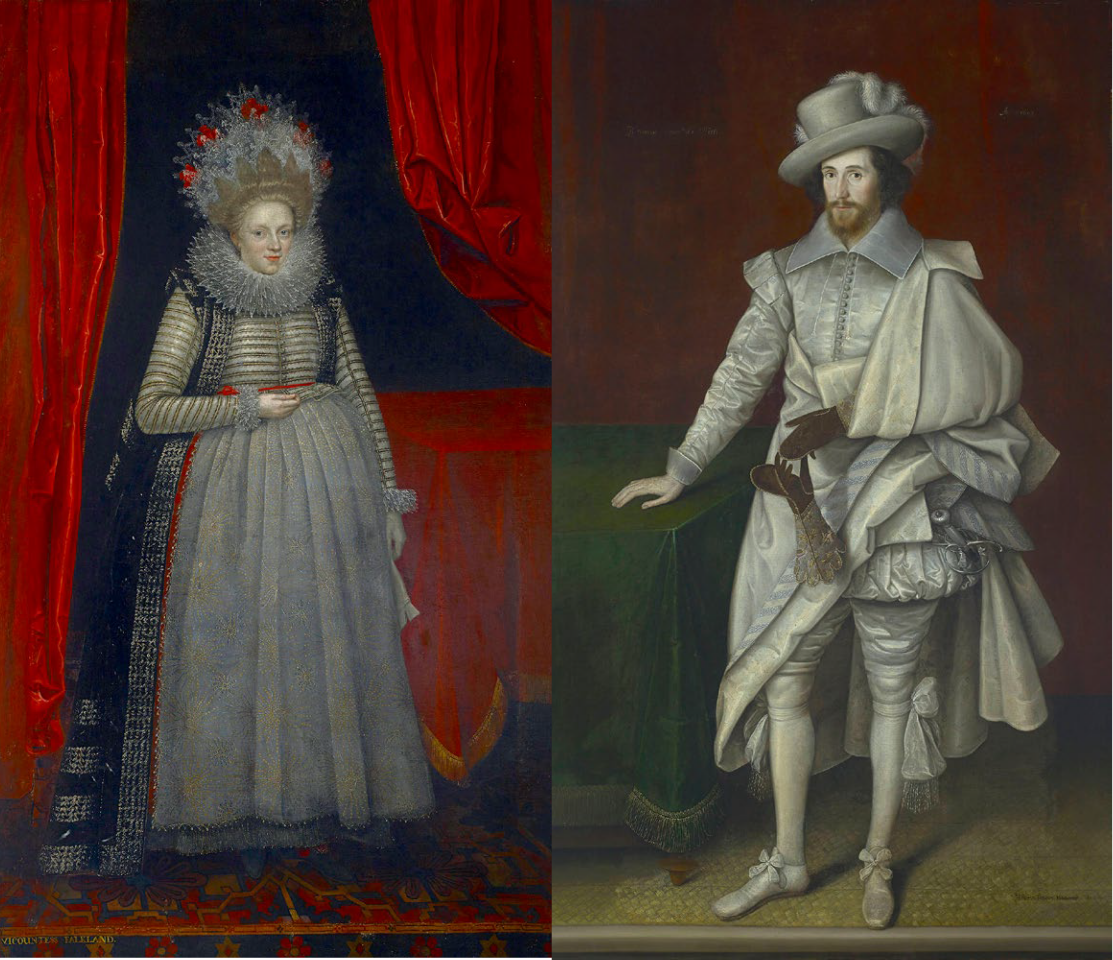
Paul van Somer & Marcus Geeraerts the Younger

Elizabeth Cary, 1st Viscountess Falkland (1585/6–1639), c. 1620
Oil on canvas
86 1/2 × 51 in.
Sarah Campbell Blaffer Foundation, Houston

Henry Cary, 1st Viscount Falkland (c. 1575–1633), 1603
Oil on canvas
85 1/8 × 50 in.
Sarah Campbell Blaffer Foundation, Houston

0 / 4 Max Entries
Registration will be open on 09/28/2026 10:00 am CST
Class 10. Bright, Shiny, and New

A novice class open to provisional members of The Garden Club of Houston and River Oaks Garden Club only. Create a design based on one of the six reflections, staged on a white pedestal (dimensions provided below). Design may not exceed 12 inches from the center of the pedestal. Viewed and judged from three sides. Containers will be provided.

Class Consultant: Liz Wozencraft / 713-252-3720 / lizwoz@att.net

Division: Division I: Floral Design
Location: Beck Gallery 220
Fee: Free

Please select one below

0 / 27 Max Entries
Registration will be open on 09/28/2026 10:00 am CST
Class 11. Let Your Inner Light Shine

A niche class. A design staged in a white niche. Niche is 24 inches x 16 1/2 inches x 14 1/4 inches. Overall height is 68 1/8 inches. The niche opening is 44 1/8 inches from the floor. Acceptable alterations to niche include adding lining, battery powered lighting, and/or a top. Viewed and judged from the front.

Niche: a space enclosed on three sides used for staging a floral design. (FS & JG Book 5: Glossary of Terms)

Class Consultant: Renee Davis / 832-215-5766 / rdominguedavis@hotmail.com

Division: Division I: Floral Design
Location: Beck Gallery 222
Fee: Free

0 / 6 Max Entries
Registration will be open on 09/28/2026 10:00 am CST
Class 12. Musings of the Modern Masters

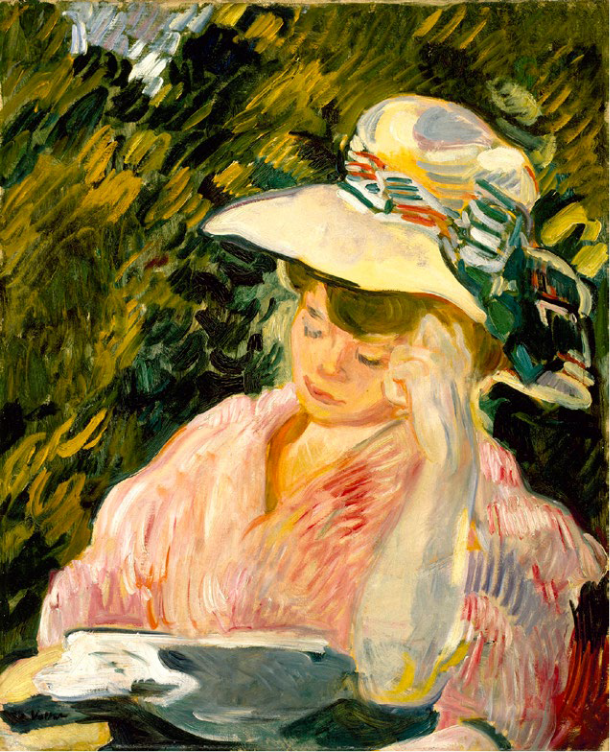
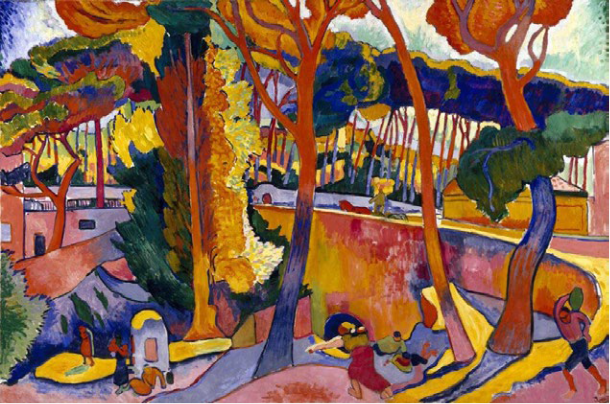
Create a contemporary design inspired by one of the following paintings, staged on a 15 1/2-inch-square x 40-inch-tall pedestal. Design not to exceed more than 12 inches from the center of the pedestal. Gallery height is 15 feet. Gallery wall color is Farrow & Ball Dorset Cream. Viewed from four sides and judged from three sides.

Contemporary design: floral design not following traditional styles, using imagination and creativity to devise new approaches to the selection and organization of plant material and other components according to the principles and elements of design. (FS & JG Book 5: Glossary of Terms)

Class Consultant: Sharon McNearney / 214-697-8063 / spm9776@gmail.com

Division: Division I: Floral Design
Location: Beck Gallery 223
Fee: Free
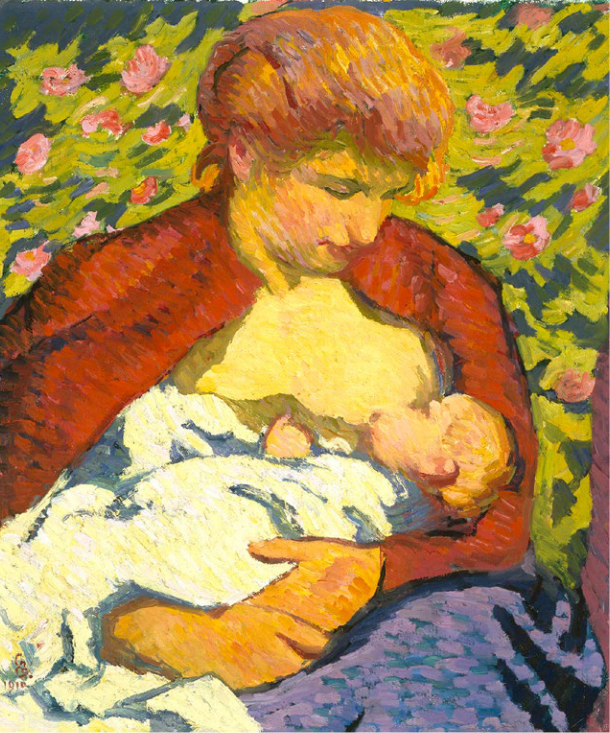

Giovanni Giacometti

Young Mother, 1910
Oil on canvas
25 3/4 × 22 in.
John A. and Audrey Jones Beck Collection, gift of Audrey Jones Beck, 98.283
Registration will be open on 09/28/2026 10:00 am CST

Louis Valtat

Madame Valtat, 1906
Oil on canvas
28 × 22 3/4 in.
John A. and Audrey Jones Beck Collection, gift of Audrey Jones Beck, 98.308
Registration will be open on 09/28/2026 10:00 am CST

André Derain

The Turning Road, L’Estaque, July 1906
Oil on canvas
51 × 76 3/4 in.
John A. and Audrey Jones Beck Collection, gift of Audrey Jones Beck, 74.138
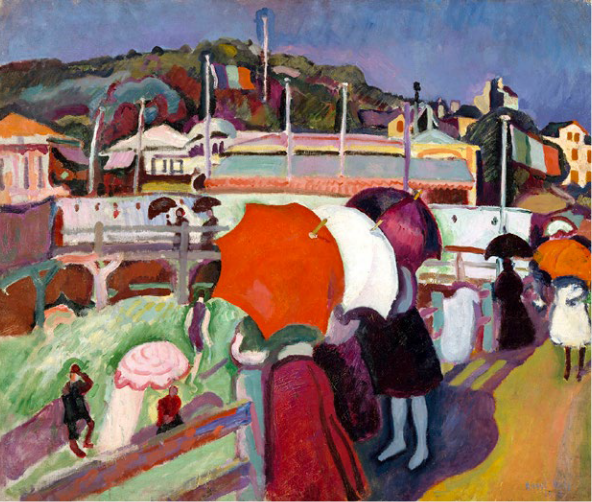
Registration will be open on 09/28/2026 10:00 am CST

Raoul Dufy

The Three Umbrellas, 1906
Oil on canvas
23 1/2 × 29 in.
John A. and Audrey Jones Beck Collection, gift of Audrey Jones Beck, 98.280

Registration will be open on 09/28/2026 10:00 am CST

Kees van Dongen

The Corn Poppy, c. 1919
Oil on canvas
21 1/2 × 18 in.
John A. and Audrey Jones Beck Collection, gift of Audrey Jones Beck, 98.279

Registration will be open on 09/28/2026 10:00 am CST

Ernst Ludwig Kirchner

Moonrise: Soldier and Maiden, 1905
Oil on board
27 1/2 × 19 1/2 in.
John A. and Audrey Jones Beck Collection, gift of Audrey Jones Beck, 98.286

Registration will be open on 09/28/2026 10:00 am CST
Radiance
Division II: Horticulture
Guidelines

Please carefully read and follow the GCA Rules, MFAH Rules, General Information, Division Guidelines, and Timetable for Exhibitors.

  1. Advanced online registration for classes 96–97 is open Monday, September 28, 2026, 10:00 a.m. CST through Monday, January 25, 2027, 6:00 p.m. CST online at flohouston.org. For questions regarding registration, please contact the Division Chairs. A plant list with the botanical and common names along with a mandatory statement of intent, of not more than 25 words, should be entered using the entry form online at flohouston.org by Monday, April 12, 2027. Changes to the plant list may be made at the show. Notify the Pre-Judged Entry Card Chairs of any changes to your entry card before judging.
  2. Entry cards are available for download from flohouston.org and from GCAmerica.org, or from the Horticulture Division Chairs or the Horticulture Committee in advance of the show and at the show.
  3. Only GCA club members, Museum personnel, and plant experts approved by the Horticulture Division Chairs may be in the passing area of the Show. Only GCA club members may participate in the entry process. Each exhibitor bears the ultimate responsibility for her own entry.
  4. Plant Inspection is the first station in the physical entry process. Plant Inspection closes at 8:45 a.m. on Tuesday, April 27, 2027, and no entries will be accepted at Plant Inspection after 8:45 a.m. Any entry presented at Plant Inspection after 8:45 a.m. may not be entered into the Show.
  5. An exhibitor may submit two entries per class, provided each is a different species or cultivar.
  6. Entries must have been owned and grown by the exhibitor for a minimum of six months (October 26, 2026) unless otherwise stated in this schedule. Exceptions are as follows:
    • Classes 1–3 and 67–74: three-month ownership (January 26, 2027)
    • Classes 80–89 and Class 99: one-year ownership (April 26, 2026)
    • Classes 96–97: length of ownership waived. Not eligible for GCA Special Awards or Best in Show.
  7. Entries eligible for the Elizabeth Platt Corning Medal and/or the Louise Agee Wrinkle Horticulture Propagation Award must have been grown by and in the possession of the exhibitor for at least six months (October 26, 2026) and not won the award previously. Eligibility will be marked on the entry card and confirmed at passing.
  8. All rooted entries propagated by the exhibitor must be identified with details of the method and relevant date(s) on an accompanying propagation card to be eligible for the Louise Agee Wrinkle Horticulture Propagation Award and Elizabeth Platt Corning Medal, if applicable. The propagation card should be downloaded from gcamerica.org and printed on cardstock.
  9. Mats, stands, saucers, etc. are not allowed. Unobtrusive stakes and ties are allowed.
  10. Classes may be subdivided, and entries moved and/or reclassified at the discretion of the Show Committee and/or the Judges. Once an entry has been passed, it may not be touched by anyone other than the Placement Committee, Horticulture Division Chairs, or the Clerks.
  11. The maximum length of an entered cut specimen is 26 inches measured from the lip of the container to the tip of the stem of the vine, branch, or leaf, unless otherwise specified in the class description. Exceptions apply to Classes 75–78.
  12. All cut specimens must be in show condition at the time of judging. Wilted specimens are subject to removal by the Horticulture Committee.
  13. Containers are measured at the diameter or the diagonal of the widest point on the inside of the rim at the soil line. Containers may not exceed 10 inches. Exception to container size applies to class 83 which may not exceed 8 inches and class 99 which may not exceed 14 inches. More than one plant per container is permitted, provided it is the same genus or species, unless otherwise stated in this schedule.
  14. Leaf shine or other commercial foliage enhancers are not permitted.
  15. One key card (diagram or plant list) is required when multiple species or cultivars are exhibited in the same container and/or propagation information is applicable. Key card must be a 4 x 6-inch white unlined card completed in black waterproof medium. See gcamerica.org for required information. A 4 x 6-inch photograph with identifying numbers may be used.
  16. Container-grown plants should be exhibited in clean terracotta clay pots. Disguised double-potting and top dressing are permitted. Plastic pots, if used, must be double potted inside a terracotta clay pot. Top dressing must not float when watered. Coffee grounds are not permitted as a top dressing. Moss is permissible as a top dressing. Must be exhibited in containers that are clean, unobtrusive, and compatible with the exhibit. Terracotta clay pots are preferred. To designate a preferred exhibiting side, exhibitors should mark the center back of the container with a white chalk mark “X.”
  17. The Horticulture Committee will provide containers and wedging materials for all cut specimens.
  18. After registration, a dot with the entry number should be affixed to the container to ensure the entry card, if separated from the exhibit container during staging, can be returned to the proper entry before judging.
  19. The Preservation Committee will water the exhibits if instructed to do so in writing. Notify the Horticulture Division Chairs at time of entry with instructions for watering.
  20. Questions regarding class requirements may be directed to the Class Consultant and/or Horticulture Division Chairs. Questions regarding Classes 96–98 requirements may be directed to Judy Lee, judylee.tx@gmail.com, or Vaughan Clark, vaughanc1@aol.com.
  21. All exhibits must remain as placed and judged until 5:00 p.m. on Wednesday, April 28, 2027. Cut specimens will be discarded starting at 5:15 p.m. on April 28, 2027. Container plants must be picked between 5:15 p.m. and 7:00 p.m. on April 28, 2027. The exhibitor is responsible for his or her own entries.
  22. Scale of points by which the classes are to be judged should refer to the FS & JG Book 4: Judging at Flower Shows, pgs. 30-41, 2026 Edition.

Brilliance

CUT SPECIMENS (Classes 1–78)

Specimen(s) not to exceed 26 inches in length from lip of container to tip of stem (lip to tip rule), unless exception is stated in Class Description.

Classes 1–3. Annuals

An annual is a plant that normally completes its life cycle (germination, flowering, seeding, dying) in one growing season.

Three-month ownership requirement (January 26, 2027).

Flowering: In flower. Any foliage must be attached to the stem.

  1. Single stem
  2. Three stems, same species, or cultivar

Foliage:

  1. Single stem

Classes 4–29. Perennials

A perennial is a plant that, by virtue of its biology, lives for more than two growing seasons. An annual plant that grows for more than two growing seasons, is not a perennial plant.

Flowering: One single flowering stem. Any foliage must be attached to stem.

  1. Hellebores
  2. Monarda
  3. Salvia
  4. Other

Flowering: Three stems, same species or same cultivar, in a single container. Foliage must be attached.

  1. Aquilegia
  2. Echinacea
  3. Justicia brandegeeana
  4. Rudbeckia
  5. Salvia
  6. Other

Foliage: Single stem, foliage only.

  1. Begonia
  2. Farfugium non-variegated
  3. Farfugium variegated
  4. Fatsia japonica
  5. Philodendron
  6. Other

Foliage: Three stems, same species or same cultivar, in a single container.

  1. Hosta
  2. Farfugium
  3. Other

Ferns: Single stem.

  1. Asplenium nidus
  2. Cyrtomium
  3. Dryopteris
  4. Platycerium
  5. Polystichum
  6. Pteris
  7. Other

Classes 30–36. Bulbs, Corms, Rhizomes, and Tubers

Definitions, per GCA Flower Show & Judging Guide 2026 Glossary of Terms:

BULB is a modified underground stem, which is typically very short, flattened, and surmounted by a group of usually fleshy, non-green, scalelike leaves. Bulbs are sometimes covered by a thin, membranous layer, e.g., onions and tulips, or fibrous and reticulated, tunic, e.g., Allium, or the scales may be naked, e.g., Lilium.

CORM is a bulb-like, swollen underground stem stored with reserve food and bearing buds or growing shoots on its surface, e.g., Crocus, Gladiolus, Cyclamen, or Colchicum.

RHIZOME is a thick, horizontal stem (under or above the ground) that forms roots, stores food, and sends up leaves and flowering stalks.

TUBER is a swollen underground stem, usually rounded, with buds or “eyes” from which new plants or tubers are produced, e.g., potato.

Flowering: Single flowering stem with or without attached foliage. Bulbs:

  1. Hippeastrum
  2. Iris
  3. Lilium
  4. Other
  5. Corm
  6. Rhizome
  7. Tuber

Classes 37–39

Foliage: Single stem, foliage only:

  1. Alocasia
  2. Colocasia, noninvasive only
  3. Other

Classes 40–46. Roses

One stem or spray with at least one attached leaf, containing 5 leaflets.

  1. Species roses
  2. Old-garden roses (prior 1867)
  3. Grandiflora
  4. Hybrid tea
  5. Shrub
  6. Climbing
  7. Other

Classes 47–55. Woody Plants

Flowering or Fruiting. Single branch not to exceed 26 inches from lip of container to tip of stem.

  1. Benthamidia (formerly known as Cornus)
  2. Duranta
  3. Gardenia
  4. Hydrangea
  5. Ilex
  6. Magnolia
  7. Rhododendron
  8. Viburnum
  9. Other

Classes 56–58. Woody Plants: Foliage Only

Single stem not to exceed 26 inches from lip of container to tip of specimen.

  1. Acer
  2. Variegated
  3. Other

Classes 59–65. Climbers and Vines

Flowering: Specimen must be longer than 7 inches and not to exceed 26 inches from lip of container to tip of stem. Must have at least one open flower. Excluding climbing roses.

  1. Aristolochia
  2. Clematis
  3. Lonicera, noninvasive only
  4. Passiflora
  5. Other

Foliage: Specimen must be longer than 7 inches and not to exceed 26 inches from lip of container to tip of stem.

  1. Non-variegated
  2. Variegated

Classes 66–67. Fruits and Vegetables

To be staged on a plate provided by the Committee or in a clear glass container, provided by the exhibitor.

  1. Fruit: Attached to stem and six-month ownership requirement (October 26, 2026).
  2. Vegetable: Three-month ownership requirement (January 26, 2027).

Scale of Points for Judging Fruits and Vegetables

  • Quality: best eating stage, good color 35
  • Condition: free from disease, blemishes 30
  • Size: average or slightly above 15
  • Typical of variety 20
  • Total 100

Classes 68–74. Herbs

Single stem and three-month ownership requirement (January 26, 2027).

  1. Laurus nobilis
  2. Mentha
  3. Origanum
  4. Petroselinum
  5. Salvia Rosmarinus
  6. Thymus
  7. Other

Classes 75–78. Cut Collections

Cut specimens from the exhibitor’s garden arranged in a clear glass container provided by the exhibitor. May not exceed 34 inches from lip of container to tip of specimen. Minimum of three different species or different cultivars. Key card required.

  1. Flowering: must have at least one open flower on each species or cultivar
  2. Foliage
  3. Combination of any specimens collected from exhibitor’s garden, exhibited in single container
  4. Three to five specimens from the same genus or same family in separate containers

Scale of Points — Class 77 (single container)

  • Cultural Perfection 40
  • Design 30
  • Diversity 20
  • Key Card 10
  • Total 100

Scale of Points — Class 78 (separate containers)

  • Cultural perfection 40
  • Distinction 25
  • Variety 15
  • Artistic effect 10
  • Key Card 10
  • Total 100

Dazzle

CONTAINER-GROWN PLANTS (Classes 79–95)

Class 79. Double Vision: Paired Perfection

  1. A perfectly paired and rooted duo, mirroring each other in species, size, color, and form for a striking double impact. Each specimen planted in matching pots.

Classes 80–83. Cacti

One plant per container. One-year ownership requirement (April 26, 2026).

  1. Echinocereus
  2. Mammillaria
  3. Other
  4. Three to seven different species or different cultivars of the same genus, each in a separate container. Containers may not exceed 8 inches. Key card required.

Classes 84–88. Succulents Other than Cacti

One plant per container. One-year ownership requirement (April 26, 2026).

  1. Agave
  2. Aloe
  3. Euphorbia
  4. Haworthia
  5. Other

Classes 89–91. Plants Grown Primarily for Flowers

One plant per container.

  1. Orchids: One-year ownership requirement (April 26, 2026)
  2. Pelargonium
  3. Other

Classes 92–95. Plants Grown Primarily for Foliage

One or more plants of the same species or same cultivar in one container.

  1. Ferns, non-variegated
  2. Peperomia
  3. Other, non-variegated
  4. Other, variegated
Class 96. Mirrored Tranquility

Design a serene miniature garden (1 inch = 1 foot) in a lined wooden container (20 inches x 10 inches x 5 inches) provided by the Committee. The design should include a mirror provided by the exhibitor. No height restrictions. Painting, embellishment, and accessories are allowed. Viewed from all sides. Staged on a 6-foot table. A 4 x 6-inch key card and statement of intent are required. Length of ownership waived and not eligible for GCA Special Awards or Best in Show. Registration and entry fee payment is required by Monday, January 25, 2027. This entry must be entered on Monday, April 26, 2027, between 1:00–5:00 p.m. and passed in place.

Class Consultant: Judy Lee / 713-828-3576 / judylee.tx@gmail.com

Division: Division II: Horticulture
Fee: $40

0 / 6 Max Entries
Registration will be open on 09/28/2026 10:00 am CST
Class 97. Radiance Revealed

An elegant horticultural composition featuring plant material displayed in a vessel, provided by the Committee; celebrating light, reflection, and luminous beauty of botanical form. The exhibit should contain at least three culturally compatible, rooted species, or cultivars. Accessories are not permitted. Viewed from all sides. Staged on a 15 1/2-inch-square x 40-inch-tall pedestal. A 4 x 6-inch key card and statement of intent are required. Length of ownership waived and not eligible for GCA Special Awards or Best in Show. Registration and entry fee payment is required by Monday, January 25, 2027. This entry must be entered on Monday, April 26, 2027, between 1:00–5:00 p.m. and passed in place.

Class Consultant: Vaughan Clark / 713-899-8716 / vaughanc1@aol.com

Division: Division II: Horticulture
Fee: $40

0 / 6 Max Entries
Registration will be open on 09/28/2026 10:00 am CST

Class 98. Provisional Challenge

  1. Flowering nasturtium, Tropaeolum majus, plants grown from seed in a clay pot provided by the Committee. The Nasturtium seeds will be distributed by the Committee before Monday, October 26, 2026. This Class is open only (and mandatory) to the Provisional members of The Garden Club of Houston and River Oaks Garden Club (2nd year).

Class 99. Par Class

  1. An exhibit of exceptional horticultural merit that does not qualify for entry elsewhere in the Horticulture Division. Entries must have been owned, grown, and in the possession of the exhibitor for a minimum of one year (April 26, 2026). Cut specimens, orchids, or hanging baskets are not permitted. Container requirement waived, as specified in Horticulture guidelines, though may not exceed 14 inches in diameter.
Impressions
Division III: Photography
Guidelines

Please carefully read and follow the GCA Rules, MFAH Rules, General Information, and the Timetable for Exhibitors.

  1. An exhibitor is permitted only one entry per class but may enter two classes.
  2. This is a juried show. Registration opens Monday, November 30, 2026, at 10:00 a.m. CST. Advanced online registration, including image, is required by Monday, February 1, 2027, 6:00 p.m. CST at flohouston.org. A JPEG image between 1MB and 10MB in the RGB color space of the entered photo is due at time of registration. By date of receipt, the first 16 digital photographs per class, received with correct specifications, will be submitted to the juried panel of photography judges. From these, six finalists per class will be selected. The finalists and non-finalists will be notified by Monday, March 1, 2027.
  3. Finalists’ printed photographs must be received no later than Monday, April 5, 2027. Send to Helen Chambers, 1804 Elmen St., Houston, TX 77019. Receipt of your photography will be acknowledged. For more information, contact Helen Chambers, helenchambers63@gmail.com or 713-906-6595.
  4. If forced to withdraw, an exhibitor must notify the Division Chair and Class Consultant and find a substitute unless there is a waiting list for the class.
  5. Photography entries are limited to subjects consistent with The Garden Club of America’s interests, including horticulture, floral design, gardens, landscapes, conservation, the environment, historic preservation, civic improvement, and the natural world.
  6. No identifiable minor children may be included in photographs.
  7. Plant material is strongly encouraged in all photographs but not required.
  8. A statement of intent is required and must be included on the entry form. The statement may not exceed 25 words.
  9. Each photograph may only be entered in one show at a time. A photograph previously entered in any GCA, GCA Major, sanctioned, or sanctioned Major flower show, or Focus online contest cannot be reentered, even with minor edits or reprinting.
  10. Any image posted in the Focus Gallery or published in Focus may not be entered in any show.
  11. A photograph previously entered in a Club flower show may be entered into a GCA flower show unless that photograph was posted in the Focus Gallery or published in an issue of Focus.
  12. Photographs not selected as finalists through juried judging may be entered in another show.
  13. The exhibitor must have created all of the visual elements of the composition. Inclusion of third party or stock images and use of AI image generators is strictly prohibited. An exhibitor is, however, permitted to use nonrepresentational, commercial textures and overlays.
  14. All editing, including, but not limited to: lighting, color, and clarity adjustments; adding and removing visual elements; combining and blending imagery; image distortion, etc., must be the work of the exhibitor.
  15. Matting, mounting, and printing may be done professionally.
  16. Photographs must be mounted on single-layer black foam core cut to the exact size of the image and may not be over-matted. The overall dimension of entry must be a minimum of 48 inches and not to exceed 72 inches in total perimeter measurement. Glass and framing are not permitted.
  17. Unless otherwise specified, all photographs must be two-dimensional and printed on paper. All postproduction work must be completed before the photograph is printed.
  18. Photographs will be hung on a gallery wall.
  19. Each entry must have the submission form affixed to the back of the photograph mounting with the class entered, exhibitor’s name, garden club, zone, email, address, phone number, and novice status. The top of the photograph must be indicated. A second loose copy of the submission form should be mailed with the entry. Photography entry forms may be found online at flohouston.org.
  20. The Division Chair will provide an entry card to be staged with each photograph.
  21. All entries will be passed by two members of the show’s Photography Committee or the Photography judging program to verify that class specifications have been met. If a photograph is not passed, the exhibitor will be notified and allowed, if time permits, to send a replacement photograph.
  22. The printed photograph must match, including cropping, the digital image sent with the original registration. Once juried, you may not further edit or manipulate the digital image in any way, as registered with us. The photo will not be passed if the Photography Committee determines: the print is significantly different from the digital submission; the print is mounted incorrectly; the mounted print does not appear to be in show condition.
  23. Questions regarding class requirements may be directed to the Division Chairs.
  24. Information on entering photographs, including mailing instructions, can be found on the GCA Photography Committee page.
  25. If the photograph is to be returned, the exhibitor must provide a self-addressed return label, check, and packing material/container. Any award received will be noted on the back of the mount before it is returned. Please include a $16 check (payable to Florescence) to cover return postage and handling. Please do not enclose stamps, UPS labels, or postage-meter strips. If the return envelope and check are not included, it will be assumed that the image will not be returned.
  26. Eligible winning images may be submitted to the Focus Gallery.

Scale of points by which classes are to be judged

For Photography Classes:

  • Creativity 25
  • Composition 25
  • Technical skill 20
  • Interpretation 20
  • Distinction 10
  • Total 100

For Creative Techniques Classes:

  • Creativity 30
  • Composition 20
  • Technical skill 25
  • Interpretation 10
  • Distinction 15
  • Total 100

Removal

Photographs must be removed ONLY by MFAH personnel and will be available for pick-up on Thursday, April 29, 2027, after 12:00 p.m. for in-town exhibitors at 1804 Elmen St., Houston, TX 77019.

If a photograph is to be returned, the Photography Committee will start return shipping on Monday, May 3, 2027.

Finalists will be notified via email the results, as soon as possible, after judging. A Photography Results Report will be emailed to all entrants by Monday, May 17, 2027.

Division Chairs

Ruthie Kelly, ruthkelly5646@gmail.com, 713-417-0801, GCH Chair
Helen Chambers, helencchambers63@gmail.com, 713-906-6595, ROGC Chair
Adele Bentsen, adelebentsen@me.com, 713-819-7821, GCH Asst. Chair
Elizabeth Pagan, elizabethpagan@me.com, 832-372-5401, ROGC Asst. Chair

Registration Issues

Nancy Keely, nancydaviskeely@mac.com, 713-201-6281

Class 1. Distortion

Color

An image produced by using imperfect surfaces to create an effect that appears to warp our sense of reality.

Division: Division III: Photography
Fee: Free

0 / 16 Max Entries (The jury will select 6 finalists from the initial 16 entries.)
Registration will be open on 11/30/2026 10:00 am CST
Class 2. Nature's Mirror

Color

A close-up image of small subject or subjects and their tiny reflection using a mirror.

Close-up: A photo taken close to the subject to permit a close and detailed view of the object.

Division: Division III: Photography
Fee: Free

0 / 16 Max Entries (The jury will select 6 finalists from the initial 16 entries.)
Registration will be open on 11/30/2026 10:00 am CST
Class 3. Facades

Black and White

Reflections on a glass building which incorporates repeating patterns into the composition.

Division: Division III: Photography
Fee: Free

0 / 16 Max Entries (The jury will select 6 finalists from the initial 16 entries.)
Registration will be open on 11/30/2026 10:00 am CST
Class 4. Mirror, Mirror

Color

A still-life image incorporating a mirror(s).

Still-life composed: An image depicting a composed arrangement of inanimate objects, either natural or man-made or a combination of both.

Division: Division III: Photography
Fee: Free

0 / 16 Max Entries (The jury will select 6 finalists from the initial 16 entries.)
Registration will be open on 11/30/2026 10:00 am CST
Class 5. Through the Looking Glass

Color

An image created by using a glass ball that acts as an external lens and is designed for capturing creative, inverted images in landscape, portrait, or macro photography.

Division: Division III: Photography
Fee: Free

0 / 16 Max Entries (The jury will select 6 finalists from the initial 16 entries.)
Registration will be open on 11/30/2026 10:00 am CST
Class 6. Musings

Color

An image of a flower using creative techniques that causes you to pause and reflect.

Creative techniques: The use of manipulation or alteration at any stage of the photographic process to achieve an effect significantly different from the original photograph. All represented images in a manipulated or creative technique photo must be the work of the photographer. Nonrepresentational enhancement such as the addition of purchased textures are allowed. The original image (4 x 6 inches) must be submitted with the entry and will be displayed after judging of the class. A brief explanation of techniques used in the process is encouraged but not required.

Division: Division III: Photography
Fee: Free

0 / 16 Max Entries (The jury will select 6 finalists from the initial 16 entries.)
Registration will be open on 11/30/2026 10:00 am CST
Class 7. Shadows

Black and White

An image of a subject or inferred subject and its shadow.

Division: Division III: Photography
Fee: Free

0 / 16 Max Entries (The jury will select 6 finalists from the initial 16 entries.)
Registration will be open on 11/30/2026 10:00 am CST
Class 8. Night Lights

Color

An image of reflections of city lights.

Division: Division III: Photography
Fee: Free

0 / 16 Max Entries (The jury will select 6 finalists from the initial 16 entries.)
Registration will be open on 11/30/2026 10:00 am CST
Close Inspection
Division IV: Botanical Arts
Guidelines

Please carefully read and follow the GCA Rules, MFAH Rules, General Information, and Timetable for Exhibitors.

  1. Registration opens Monday, September 28, 2026, 10:00 a.m. CST. Registration closes Monday, January 25, 2027, 6:00 p.m. CST at flohouston.org.
  2. An exhibitor is permitted only one entry per class but may enter more than one class.
  3. The exhibitor(s) under whose name(s) the entry has been registered must create and complete the design. All participants must be listed on the entry card. All handiwork must be executed by the exhibitor(s).
  4. No more than two exhibitors may execute a Botanical Arts entry.
  5. If forced to withdraw, the exhibitors must notify the Division Chairs and the Class Consultant and find a substitute unless there is a waiting list for the class.
  6. All plant material must be dried. This includes flowers, foliage, seeds, pods, nuts (in or out of shells), vegetables, twigs, vines, reeds, etc. While not officially part of the plant kingdom, algae, dried fungi, including lichens and mushrooms are permitted. Only plant material, fungi, algae, mechanics, and surface treatments (paint, nail polish, varnish, wax, etc.) are permitted. Use of artificial or locally endangered or invasive plant material is not permitted.
  7. Entries must be assembled, carved, or shaped from plant material by the exhibitors. Manufactured figural forms as base material are not permitted. Any plant material may be cut, incised, or shaped to enhance artistic effect.
  8. Non-plant material (e.g., cardboard, metal, twine, string, cording, etc.) may be used only for construction and must not be visible except to knot or string plant material resembling pearls or gemstones in jewelry classes. The knots must be only minimally visible and not dominate the design. Stands, bases, hangers, etc., used as staging do not need to be covered.
  9. Only natural plant material as existing or caused by nature may be visible in the design, except natural raffia, rattan, and skeletonized leaves. Items such as couscous, pasta, tapioca, milled wood, balsa wood, toothpicks, loose glitter, etc., are not permitted.
  10. Gemstones must be made from plant material and/or plant by-products of resin or sap. Gemstones may not be made from epoxy, lacquer, glue, or nail polish.
  11. Scenes, flowers, figures, etc., should be created with plant material rather than decorative painting. Painting techniques such as shading, veining, marbelizing, etc., are permitted.
  12. Anything not prohibited in the GCA Rules, Botanical Arts Division Guidelines or individual class descriptions is permitted.
  13. A statement of intent (25 words or less) is required and must be submitted with the entry card online by Monday, April 12, 2027, at flohouston.org under your registration page. A statement of intent is a brief written paragraph explaining the exhibit’s message that the exhibitor intends to convey.
  14. A 4 x 6-inch white, unlined sample card must accompany each entry. A small, untreated sample of all plant material must be affixed to the sample card with the placement noted. Plant material must be properly identified with botanical and common names.
  15. All entries must be received no later than Monday, March 29, 2027, if delivered by mail. Send entries to Mundi Elam, 3759 Rice Blvd., Houston, Texas 77005. For information contact Mundi Elam, 713-703-4331, mselam96@hotmail.com, or Jennifer O’Donnell, 713-725-5412, jdod_@me.com. If an exhibit is to be returned, the exhibitor must provide a self-addressed return label, return postage, and packing material/container.
  16. All entries will be passed by two members of the show’s Botanical Arts Committee or the Botanical Arts judging program to verify class specifications have been met. If an entry is not passed, the exhibitor will be notified and allowed, if time permits, an entry may be returned for correction.
  17. The Botanical Arts Committee will be responsible for installation of the exhibits unless otherwise stated in the schedule. Each exhibit will be handled with the utmost care. Please include a photograph that shows the preferred placement of the finished entry without any stabilizing packaging (such as pins, clamps, etc.), along with any specific handling and display instructions.
  18. If an exhibit has won first place or a GCA Special Award in a GCA Major or sanctioned Major flower show, it may not be entered into competition again. An exhibit which has been previously entered and did not place first or win a GCA Special Award may be entered again if the piece is significantly altered.

Scale of points by which the classes are to be judged

(as per FS & JG Book 4: Judging at Flower Shows, 2026 Edition):

  • Design 35
  • Craftsmanship 30
  • Creativity 15
  • Interpretation of theme 10
  • Distinction 10
  • Total 100

Inquiries

Questions regarding class requirements may be directed to the Botanical Arts Chairs:

Mundi Elam, GCH Chair, 713-703-4331
Jennifer O’Donnell, ROGC Chair, 713-725-5412
Kelly Moneyhan, GCH Asst. Chair, 713-295-0053
Carole Bailey, ROGC Asst. Chair, 713-392-1681

BOTANICAL COUTURE

A design emulating an item of clothing and/or other fashion accessory created from all dried plant material or couture form (hat, shoe, etc.) that must be entirely embellished with dried plant material. Plant material may be treated. Mechanics or structural base material may not be visible except for required staging (mannequin, stand, head form, etc.). (FS & JG Book 5: Glossary of Terms, 2026 Edition.)

Class 1. Mirror Image

Symmetry becomes the language of reflection in this Botanical Couture design. Create a gown that has a clearly defined center axis, mirrored on each side to achieve balance, harmony, and precision. Gown displayed on a 12-inch flexible wooden mannequin placed on top of a 7-inch black round velvet display pad. Design must not exceed the display pad, and mannequin may not be altered. Judged from all sides and above. Mannequin and display pad provided by the Botanical Arts Committee upon registration.

Class Consultant: Jennifer O’Donnell / 713-725-5412 / jdod_@me.com

Division: Division IV: Botanical Arts
Fee: $25

0 / 4 Max Entries
Registration will be open on 09/28/2026 10:00 am CST

BOTANICAL EMBELLISHMENT

A manufactured object enhanced with dried plant material. Plant material may be treated. Complete coverage of the object is required. Embellished objects should remain recognizable and not completely obscured. (FS & JG Book 5: Glossary of Terms, 2026 Edition.)

Class 2. Held in Reflection

A compact mirror becomes an intimate canvas for botanical embellishment, exploring reflection through texture, symmetry, and natural form. In the palm of your hand, dried plant material frame both image and meaning, inviting quiet contemplation of what is seen and what is felt. Displayed open on an oval 4 x 7-inch black velvet display pad. Design may not exceed display pad. Judged from all visible sides. Compact mirror and display pad provided by the Botanical Arts Committee upon registration.

Class Consultant: Jennifer O’Donnell / 713-725-5412 / jdod_@me.com

Division: Division IV: Botanical Arts
Fee: $25

0 / 4 Max Entries
Registration will be open on 09/28/2026 10:00 am CST
Class 3. Light Up the Room

BOTANICAL EMBELLISHMENT

A luminous single candle flickers to life and transforms a room. Embellish a taper candle and candle holder to create movement, shimmer, and send ripples across the ceiling. Displayed on a 5-inch round black velvet display pad. Design may not exceed display pad. Judged from all sides. A 6.4-inch-tall taper candle and a 3-inch-tall candleholder will be provided by the Botanical Arts Committee upon registration.

Class Consultant: Mundi Elam / 713-703-4331 / mselam96@hotmail.com

Division: Division IV: Botanical Arts
Fee: $25

0 / 4 Max Entries
Registration will be open on 09/28/2026 10:00 am CST

BOTANICAL FORMS

A design of any other form (e.g., not Botanical Couture, Embellishment or Jewelry) created entirely from dried plant material. Plant material may be treated. Mechanics or structural base material may not be visible except required staging (mounting stand, support, etc.). (FS & JG Book 5: Glossary of Terms, 2026 Edition.)

Class 4. Captured Reflection

Enter the world of Entomology! Insects are an amazing reflection of natural beauty. Create one or more specimens suspended in time beneath a clear glass cloche. Viewed and judged from all sides and above. A 7 x 7-inch cloche will be provided by the Botanical Arts Committee upon registration.

Class Consultant: Mundi Elam / 713-703-4331 / mselam96@hotmail.com

Division: Division IV: Botanical Arts
Fee: $25

0 / 4 Max Entries
Registration will be open on 09/28/2026 10:00 am CST

BOTANICAL JEWELRY

A design created entirely from dried plant material and made to resemble wearable jewelry in both size and function. Plant material may be treated. Mechanics or structural base material may not be visible. (FS & JG Book 5: Glossary of Terms, 2026 edition.)

Class 5. Echoes of Light

Reflections shimmer in symmetry and movement. Design a pair of chandelier earrings that capture light and balance to suggest mirrored forms and luminous details. Displayed on a 4 3/4-inch black earring display tree. Judged from three sides and above. Earring tree provided by the Botanical Arts Committee upon registration.

Class Consultant: Kelly Moneyhan / 713-295-0053 / kmoneyhan1@gmail.com

Division: Division IV: Botanical Arts
Fee: $25

0 / 6 Max Entries
Registration will be open on 09/28/2026 10:00 am CST
Class 6. Reflections of My Love

BOTANICAL JEWELRY

Challenge Class. A locket has long symbolized love—enduring, personal, and timeless. Create a locket attached to a blue velvet ribbon with intimate details expressing devotion. Create a locket from dried plant components provided by the Botanical Arts Committee. No other plant components may be used other than the plant components supplied, but all supplied plant components are not required to be used in the design. All finishes including, paints, glues and mechanics are the choice of the exhibitor. The display neck bust (7 x 9 inches) and a velvet ribbon will be supplied, may not be altered, and must be used. Viewed and judged from three sides.

This class is not eligible for GCA Special Awards or Best in Show.

Class Consultant: Kelly Moneyhan / 713-295-0053 / kmoneyhan1@gmail.com

Division: Division IV: Botanical Arts
Fee: $25

0 / 6 Max Entries
Registration will be open on 09/28/2026 10:00 am CST
Reflections Beneath Our Feet
Division V: Education
Guidelines
  1. Please carefully read and follow the GCA Rules, MFAH Rules, General Information, and the Timetable for Exhibitors.
  2. Education exhibits may be executed by any invited person(s), organization, or business wishing to communicate information relevant to the educational message of the Flower Show.
  3. Include a 50-word statement of intent for each Education Exhibit.

Scale of points by which Education Exhibits are to be judged

(as per FS & JG Book 4: Judging at Flower Shows, 2026 Edition):

  • Educational value 60
  • Staging 20
  • Creativity and distinction 20
  • Total 100

Statement of Intent

Reflecting on nature’s quiet systems, this exhibit reveals how fungi sustain soil health and ecosystem balance. Mycelial networks connect plant communities underground, while fungi aid decomposition that recycles nutrients into the earth. By mirroring natural processes in our gardening practices, we conserve resources, restore soil vitality, and cultivate resilient landscapes.